
What Is Predictive Analytics in Business?
A weekly report tells you what happened. Predictive analytics tells you what is likely to happen next – and that changes how a business operates. When margins are tight, supply chains are volatile and teams are under pressure to move faster, knowing where risk, demand or downtime is heading is far more useful than reviewing last month’s numbers.
So, what is predictive analytics? In simple terms, it is the use of historical data, current signals and statistical or machine learning models to forecast future outcomes. It helps organisations estimate what is likely to happen, how likely it is, and when action should be taken. The real value is not the model itself. It is the ability to make better decisions before issues become expensive.
What is predictive analytics and how does it work?
Predictive analytics sits between traditional reporting and fully automated decision-making. Standard business intelligence explains the past. Predictive analytics uses that foundation to estimate future events, such as customer demand, equipment failure, delayed deliveries, stockouts or rising operational risk.
The process is straightforward in principle. A business brings together relevant data from systems, sensors, spreadsheets and external sources. That data is cleaned and standardised, because inconsistent inputs lead to unreliable outputs. A model then identifies patterns in the data and uses them to generate forecasts or probability scores.
For example, a manufacturer might combine maintenance logs, machine sensor data and production schedules to predict when an asset is likely to fail. A retailer might use sales history, promotions, seasonality and local events to forecast product demand. A logistics team might analyse route performance, weather and depot activity to identify where delays are likely to occur.
The models vary. Some are relatively simple time-series forecasts. Others use regression, classification or more advanced machine learning techniques. The right approach depends on the problem, the quality of available data and how much explainability the business needs. In many cases, a less complex model that people trust and act on is more valuable than a technically impressive one that nobody uses.
Why businesses use predictive analytics
The commercial case is clear. Predictive analytics helps teams act earlier, allocate resources more effectively and reduce avoidable cost. Instead of reacting after performance drops, operations leaders can spot likely issues in advance and intervene while there is still room to change the outcome.
That matters in practical ways. In healthcare, it can support capacity planning and identify pressure points before service levels slip. In manufacturing, it can reduce unplanned downtime and improve maintenance scheduling. In retail, it can sharpen inventory decisions and reduce lost sales or excess stock. In facilities management, it can highlight assets that are drifting towards failure before they disrupt service.
There is also a speed advantage. Many organisations still rely on manual reporting cycles that arrive too late to be strategically useful. By the time the spreadsheet is complete, the problem has moved on. Predictive analytics shortens that lag. It gives decision-makers a forward view, which is often the difference between controlling performance and chasing it.
What predictive analytics is not
It is not a crystal ball, and treating it like one is where disappointment starts. Predictive analytics improves the odds of making the right decision. It does not remove uncertainty altogether.
Forecasts are shaped by the data behind them. If records are incomplete, definitions are inconsistent or operating conditions change sharply, model accuracy can drop. That does not mean predictive analytics has failed. It means the forecast should be interpreted as a decision support tool, not a promise.
It is also not only for data scientists. That assumption has slowed adoption for years. The strongest commercial results usually come when predictive insight is accessible to operations managers, planners, analysts and executives in plain English, with enough context to make action obvious.
The core components of predictive analytics
Behind every useful prediction is a fairly disciplined workflow. The first component is data ingestion. Most businesses do not suffer from a lack of data. They suffer from fragmented data spread across systems that were never designed to work together. Pulling information from IoT devices, ERP platforms, spreadsheets, databases and APIs is often the first hurdle.
The second component is data preparation. Cleansing, deduplication, standardisation and harmonisation are not glamorous tasks, but they are essential. Poor data quality quietly erodes trust, and once trust is lost, adoption stalls.
The third component is modelling. This is where statistical methods or machine learning algorithms analyse patterns and generate forecasts, alerts or probability scores. The fourth is delivery. Predictions only create value when they reach the people who need them, in a form they can understand and use quickly.
The final component is feedback. Models should not be static. As new data arrives and outcomes become visible, performance can be measured and forecasts refined. Businesses that treat predictive analytics as a living operational capability tend to outperform those that treat it as a one-off project.
Common use cases that deliver measurable value
The strongest predictive analytics programmes start with a commercial problem, not a fascination with AI. That could be excess inventory, asset downtime, labour inefficiency, service delays or demand volatility. When the use case is tied to a measurable outcome, adoption becomes easier and ROI becomes visible.
Demand forecasting is one of the most common examples. Better forecasts improve purchasing, staffing and production planning. They also reduce the familiar waste of over-ordering in one area while running short in another.
Predictive maintenance is another high-value use case. Rather than servicing equipment on a fixed schedule or waiting for failure, teams can intervene when data indicates rising risk. That often lowers maintenance spend while improving uptime.
Risk detection is equally important. A predictive model can flag patterns associated with delayed fulfilment, quality issues or compliance drift before they escalate. For leadership teams, that moves analytics from passive reporting into active risk management.
The trade-offs and limits leaders should understand
Not every process needs predictive analytics. If a decision has low cost, low frequency or little variation, traditional reporting may be enough. Predictive analytics creates the most value where timing matters, variability is high and the cost of getting it wrong is significant.
There is also a trade-off between sophistication and usability. Highly complex models can improve accuracy, but they may be harder to explain, govern and trust. In regulated or operationally sensitive environments, explainability matters. Teams need to know why a model produced a prediction, not just that it did.
Implementation speed matters too. A technically perfect model that takes nine months to deploy may lose to a good model delivered in weeks, especially when market conditions are changing. For many organisations, the right goal is not theoretical perfection. It is faster, more confident decision-making with measurable business impact.
What to look for in a predictive analytics platform
If you are evaluating capability rather than building everything in-house, look beyond the model. The real question is whether the platform can support the entire journey from raw data to operational action.
That includes fast integration with existing systems, automated data quality checks, reliable harmonisation, forecasting tools that suit real business use cases and outputs that non-technical teams can understand. Governance should not be an afterthought either. Audit logs, access controls, rollback capability and secure architecture matter, especially when predictive outputs influence commercial or operational decisions.
It also helps to ask how quickly value can be proven. A platform that shows measurable impact early will usually win internal support faster than one that promises transformation later. That is one reason businesses are moving towards solutions that combine data preparation, forecasting, simulation and business-facing insight in one place, rather than stitching together separate tools.
What is predictive analytics really worth?
Its value is not in producing more charts. It is in changing the quality and timing of decisions. When teams can see likely demand shifts, asset risk, service bottlenecks or financial pressure before they hit the bottom line, they stop managing by hindsight.
That creates a practical competitive advantage. The business buys more accurately, schedules more intelligently, intervenes earlier and explains decisions with greater confidence. Over time, that compounds into lower waste, stronger service performance and better use of working capital.
For organisations still trapped in reactive reporting, predictive analytics is not a luxury layer on top of existing processes. It is the operational upgrade that allows leaders to turn uncertainty into advantage. The strongest results come when prediction is not kept in a specialist corner, but built into the daily rhythm of planning, operations and performance management.
If your data already tells the story of what has happened, the next question is simple: are you using it to lead what happens next?
Related Posts
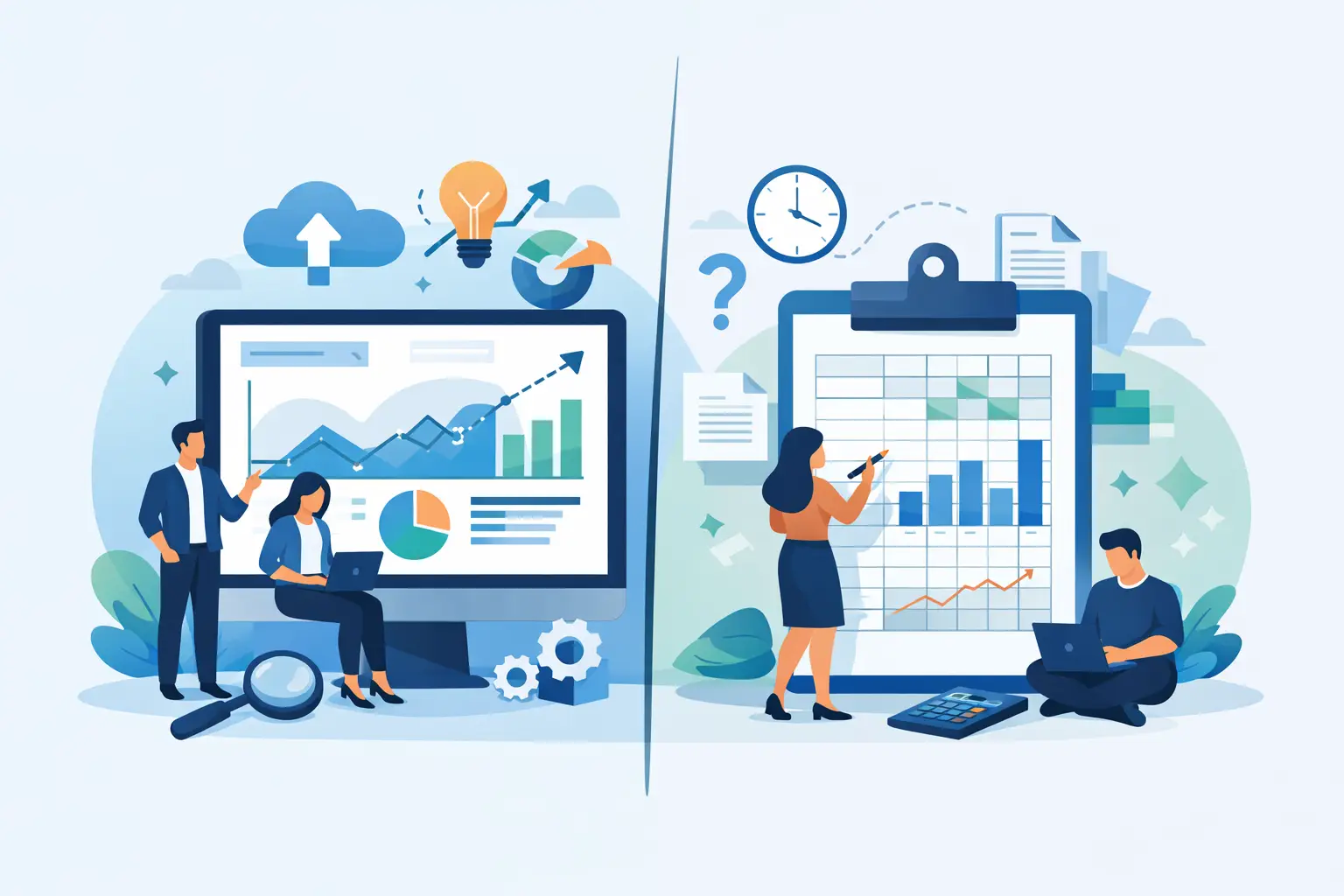
Forecasting Software vs Spreadsheets
A planning meeting slips by because the demand file is still being checked. Finance has one versi...
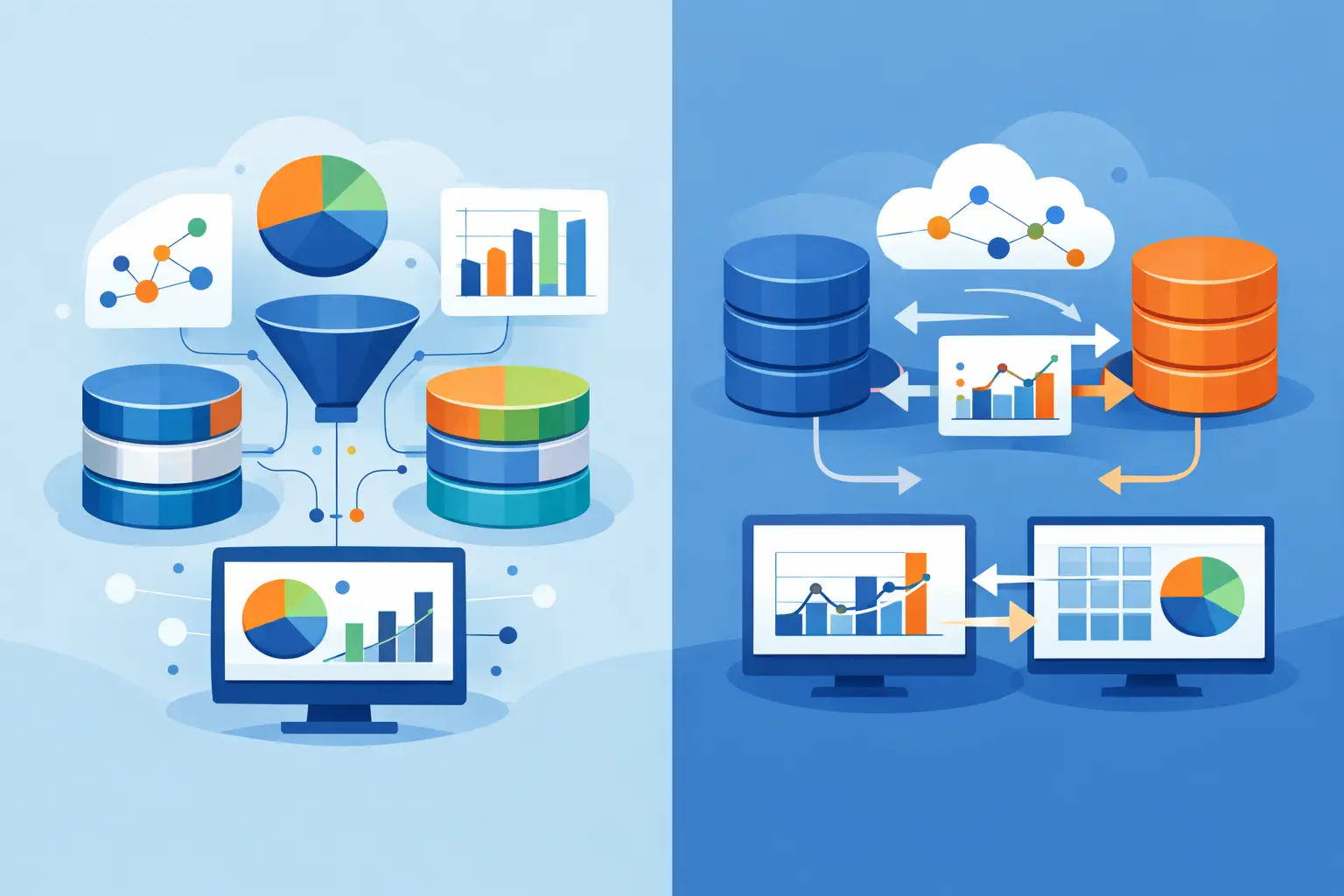
Data Harmonization vs Data Integration
If your teams are still reconciling sales files, ERP exports and supplier spreadsheets before the...
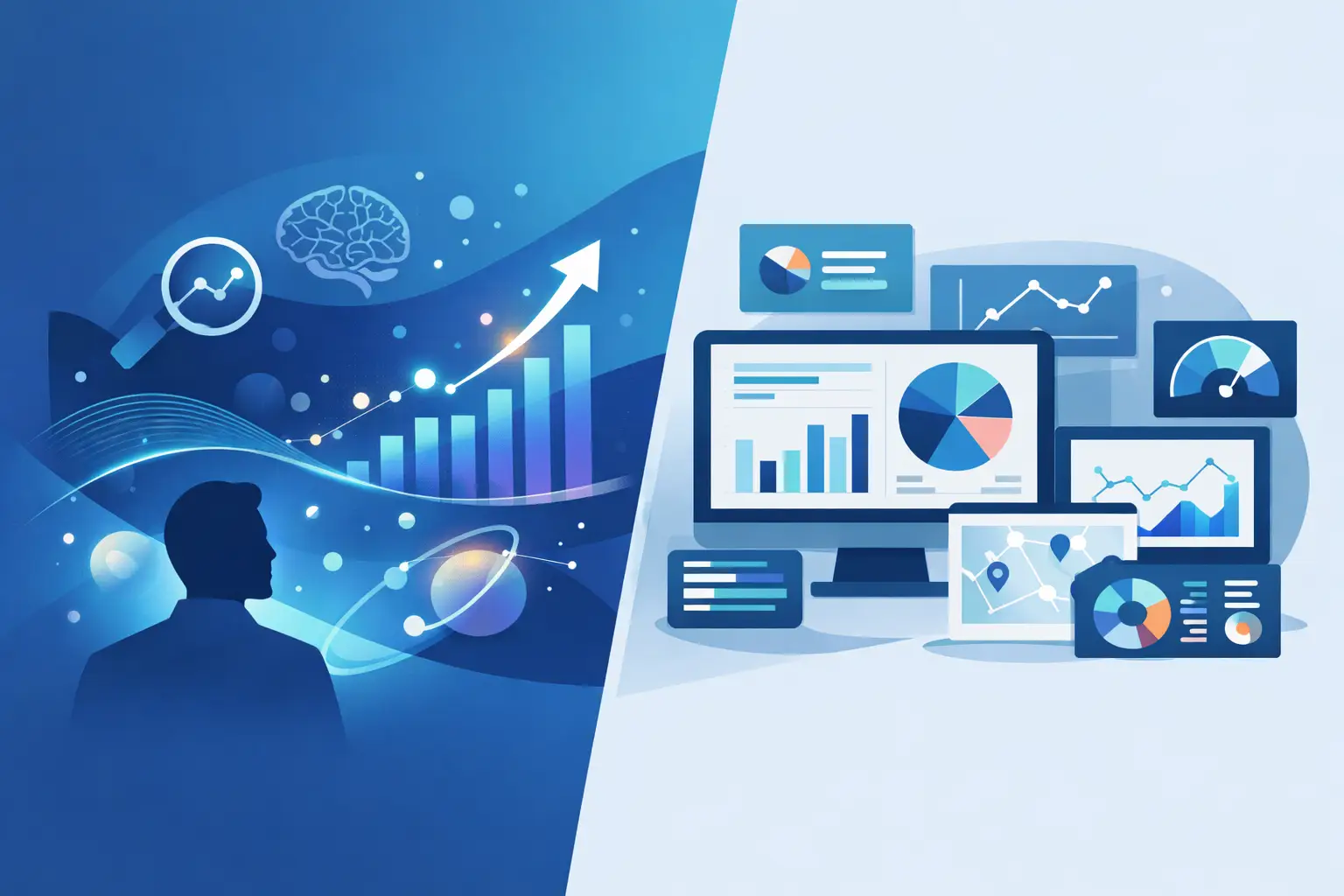
Predictive Analytics vs Dashboards Explained
A dashboard tells you sales dropped last week. Predictive analytics tells you why it is happening...